Share


This story was originally published on the World Bank website.
Story highlights:
- From subsistence to market-ready: With investments in agricultural inputs, infrastructure, and farmer skills, a World Bank Group–supported project is helping Tripura Sundari Rural Municipality shift toward commercial farming and stronger, more resilient value chains.
- Leveraging partnership and capital: By improving market access in partnership with the local government—and crowding in public and private capital—the project is connecting producers to buyers, catalyzing inclusive growth.
- Local produce, long-term gains: Generating demand for locally produced food and enabling cross‑group cooperation are securing double wins—higher farm incomes and better nutrition—while laying the groundwork for sustainable, community‑led impact beyond the life of the project.
- Families in Damside village of Tripurasundari Rural Municipality in Sindhupalchowk had traditionally grown vegetables. But as Rita Napit, a local resident, recalls, farming slowly began to lose its appeal.

“Taking small quantities to the market took too much time and effort. Slowly, we reduced production and even left land fallow,” says Napit.
That pattern began to change when Napit and her neighbors organized themselves as the Damside Farmers Group with support from the Food and Nutrition Security Enhancement Project II (FANSEP II), which is led by Nepal’s Ministry of Agriculture and Livestock Development and financed by a grant from the Global Agriculture Food Security Program (GAFSP).
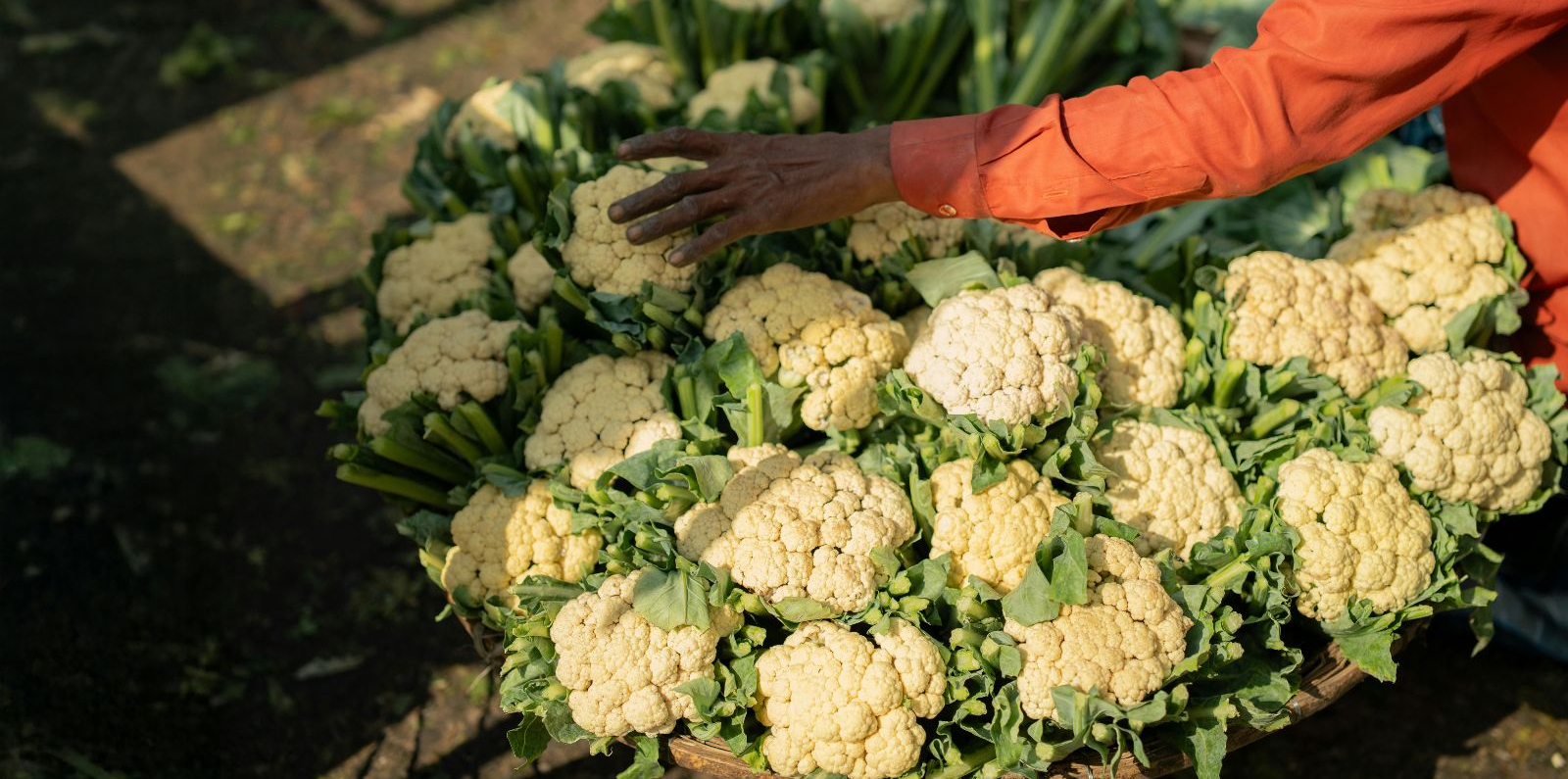
Today, all 25 members of the group, including Napit are producing vegetables such as potatoes, cauliflower, tomato, radish, beans, cucumber, pumpkin, and bitter gourd at a scale they had never imagined before – thanks to the quality seeds, demonstration, trainings, and other inputs provided by the project to improve their farming skills, productivity, and income.
In the year 2026 only, the group expects to produce more than 15 tons of vegetables.
In the rural municipality, FANSEP II has altogether supported 58 farmer groups, including crop and livestock groups, out of which 32 crop farmer groups are setting a target to produce around 80 tons of vegetables annually.
FANSEP II helped support a value chain to bring production at scale to market – something farmers had lacked for years – and is working closely with the local government to link farmers to reliable buyers.
The project has helped support a value chain to bring production at this scale to market – something farmers had lacked for years – and is working closely with the local government to link farmers to reliable buyers.
Improving market access through collaboration
To address market access challenges, FANSEP II engaged with the farmers groups and the rural municipality to build a collection and processing center with a cold chamber.
Financed at about NRs 35 lakh ($25,750), with 36% from the municipality, 11% from farmers’ groups, and the rest from the project – the facility stands as a model of leveraging public and private capital through effective partnership.
The facility is managed by an inclusive committee comprised of representatives of various farmers’ groups, including those supported by FANSEP II and representatives from the local government, ensuring shared ownership and accountability.
The facility provides the farmers with direct access to markets, allowing buyers to collect quality products from one location, while farmers save time and transportation costs. It has also helped reduce post-harvest losses and build access to markets, including Kathmandu.
FANSEP II further improved farmers’ market access by supporting improved vegetable seeds, promoting group-based commercial production, and helping farmers’ groups develop business plans. It also strengthened linkages with buyers such as local vendors and traders to ensure better prices and stable sales.
“With storage and collection facility in place, we felt confident again,” says Napit. “We have started cultivating previously unused land with improved vegetable seeds and are now applying what we learned from the project on a much larger scale.”

Building institutions for sustainability
Inspired by FANSEP-II’s initiative to organize farmers into farmers’ groups, the rural municipality established farmers’ groups in all six wards and supported the formation of a farmers’ group federation in 2024 covering more than 4,200 households, including farmers’ groups supported by the project.
Today, the farmers’ group federation has grown into a strong local institution with an annual turnover of over one crore Nepali Rupees (about $70,000).
The farmers’ group federation purchases produce in cash from farmers, operates a collection vehicle or “agriculture ambulance” to collect vegetables in bulk, and sells them to markets in Barhabise, Dolakha, Khadichaur, and Kathmandu. Smaller quantities are brought to collection centers by farmers themselves for grading and sorting before transport.
“The rural municipality only provided seed money of Rs. 50,000 ($343) to each ward-level group and Rs. 500,000 ($3,435) to the federation,” says Samrat Singh Bohara, chairperson of the farmers’ group federation. “Today, all the farmers’ groups and the federation in the rural municipality are self-sustaining and ready to expand.”
Besides that, Bohara, a content creator with a huge follower-base in social media, promotes farmers’ products online, earning through monetization and product sales. Bohara opines that regular social media activity could promote sales of up to Rs. 200,000 ($1,374) per month, supporting the federation’s sustainability.
Generating local demand: linking farmers to school meals
Tripurasundari Rural Municipality has 29 public schools, all running mid-day meal programs.
“Children’s nutrition was a serious concern,” says Bhaktadhoj Bohara, Chairperson of the rural municipality. “We realized that if schools could source food locally, children would eat better and farmers would have a guaranteed market.”
The farmers’ group federation helps connect farmers' groups with schools by supplying products on a daily basis.
Earlier, schools provided students with processed food readily available in the market but now they serve locally produced and healthy diet of rotis, beaten rice, vegetables, and pulses.
“This initiative has helped improve farmers’ incomes and children’s health at the same time,” municipal Chairperson Bohara emphasizes.
Key lessons learned
This initiative demonstrates that projects can become impactful when local governments lead, communities co-own, and projects align with existing systems.
Chairperson Bohora acknowledged that lessons from FANSEP II’s nutrition-related activities, especially learnings from Nutrition Field School, have significantly improved the nutritional health of children and women in the area.
Building on this, FANSEP II plans to continue engaging with the school authorities, students, and communities to enhance awareness on better dietary habits.
Furthermore, the rural municipality plans to promote cross-group learning exchanges by encouraging FANSEP II-supported farmers’ groups to share their Farmer Field School (FFS) experiences with other farmers’ groups in the locality.
“As registered entities under the rural municipality, their institutional knowledge will be crucial in further improving agricultural productivity and strengthening nutrition practices,” Chairperson Bohara says.
This initiative demonstrates that projects can become impactful when local governments lead, communities co-own, and projects align with existing systems.
For Tripurasundari, what began as a simple farming intervention has evolved into a locally owned, market-driven system, one that ensures farmers earn more, children eat better, and the benefits continue long after the project ends.
FANSEP-II contributes to the World Bank Group’s AgriConnect initiative by strengthening rural foundations for the agri-food systems to help raise incomes for smallholder farmers.

Type
Impact Stories
Date