Share


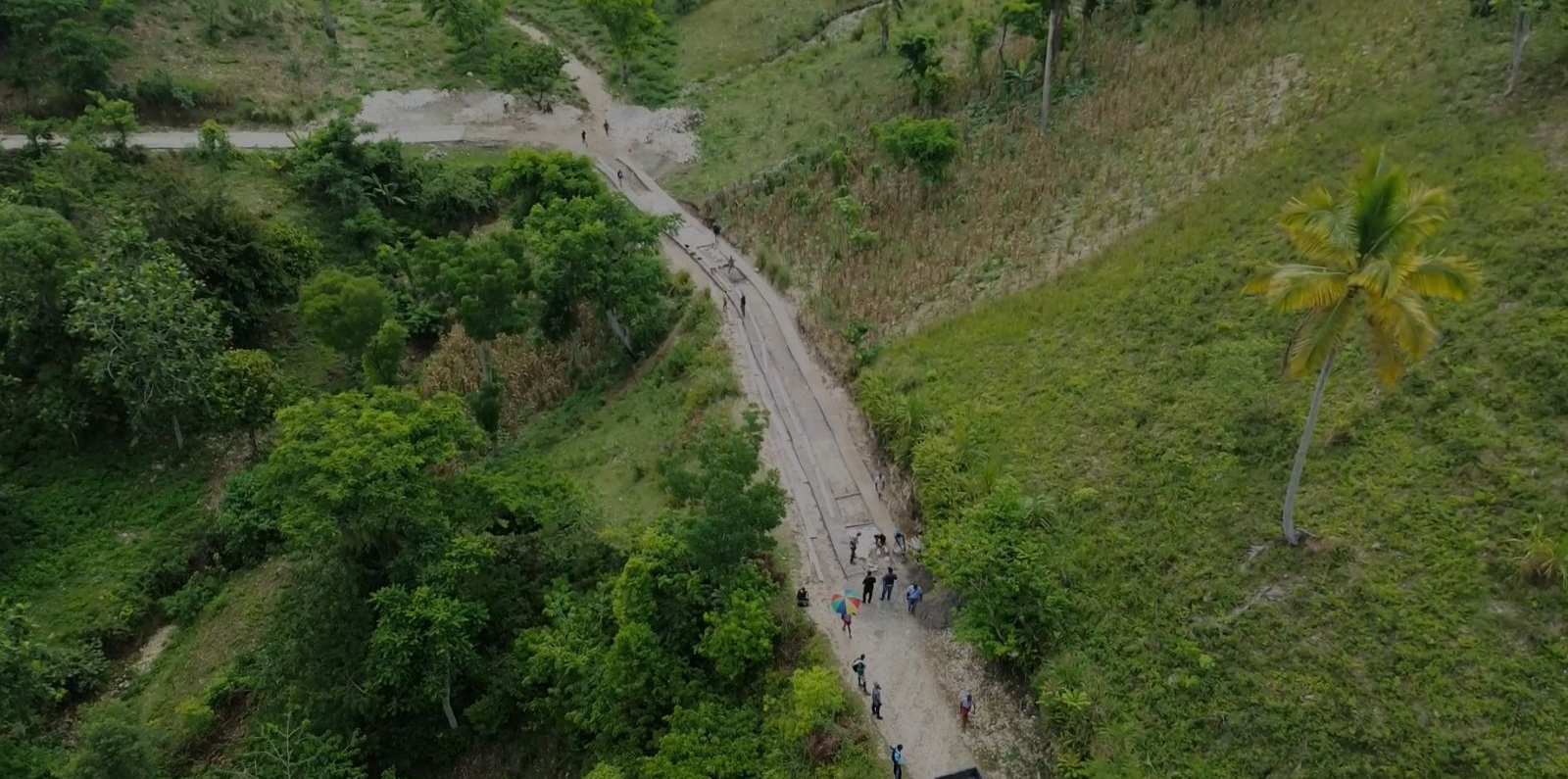
Grand’Anse, a peninsula in the southwest of Haiti known for its lush beauty, is a place where farming has long been a way of life. For the past four and a half years the area has worked hard to come back from the devastating 7.2 magnitude earthquake that hit four years ago.
Women farmers are helping to lead the comeback.
The Global Agriculture and Food Security Program (GAFSP), committed to boosting the economic autonomy of women farmers, particularly in countries facing fragility and conflict, has been supporting women’s livelihoods in Grand’Anse, through a project in partnership with the World Food Programme (WFP).
The Promotion of Resilient Agriculture through Agroforestry in Grand’Anse project (PARAGA in French) is supporting women in the region through a US $3 million grant to the producer organization and cooperative network ROPAGA (Réseaux des Organisations de Producteurs et Productrices de la Grand’Anse). The project also supports agroforestry, livestock management and beekeeping to improve food security and income.
For Berline Joseph, a farmer living in Jeremie, the capital of Grand’Anse, the support from ROPAGA has been crucial. She recalled how the PARAGA project taught her to diversify her crops and improve her approach to farming. “Before, I only planted one crop,” she explains. “Now, I plant different varieties. It changes how we eat, and it helps us save.”
Building Income and Independence
According to UN Women, women comprise more than two thirds of the agricultural work force in Haiti. However, they face many barriers to improved food security, such as limited access to quality seeds and unpredictable harvests, and have few opportunities to earn income, all of which GAFSP and partners seek to address.
"The project lent us money,” Joseph said. “We increased our businesses. We reinvested the profits into our gardens.”
These investments ripple outward, improving nutrition, supporting households, and helping women access local markets.
Knowledge and Leadership
Dani Cadet highlights another dimension of the project: building knowledge and leadership. Training sessions taught women to apply agroecological techniques in ways that reduce loss and improve productivity. “They taught us how to conserve our crops, how to make compost, how to treat pests, and how to balance our plants so they grow well,” she said.
Beyond farming techniques and financial support, the project aims to strengthen local farmer organizations and create spaces where women can take on leadership roles, collaborate with local government, and start their own businesses. The long-term goal is to help women guide the future of their communities.
From Survival to Dignity
Women in Grand’Anse say they are building resilience and independence. Where there was once dependency, there are the seeds of entrepreneurship. And where uncertainty once dominated, there is hope. As Joseph puts it, “The project has helped me move forward with my agriculture. It has changed my life, and I want to keep learning, keep planting, and keep growing.”
The University of Vermont’s Institute for Agroecology cites PARAGA as an example of how international partners and agencies play a pivotal role moving global food systems toward resilience and sustainability through agroecological approaches focused on human rights and local communities.
The focus on rural development in this GAFSP-WFP partnership, which includes ROPAGA and ActionAid, is key to a country like Haiti where insecurity is heavily concentrated in the capital. Economic activity in rural areas helps Haitians throughout the country restore community resilience and build hope. Rather than being hindered by Haiti’s fragility, the project contributes to overcoming it.
These video interviews were produced by Coordination pour des Actions en Santé et en Développement d'Haïti (COSADH) and ActionAid Haiti, as part of the Civil Society Partnership for GAFSP led by ActionAid International, together with the Eastern and Southern Africa Small-Scale Farmers Forum (ESAFF), Asian Partnership for the Development of Human Resources in Rural Areas (AsiaDHRRA) and Coordination pour des Actions en Santé et en Développement d'Haïti (COSADH).

Type
Impact Stories